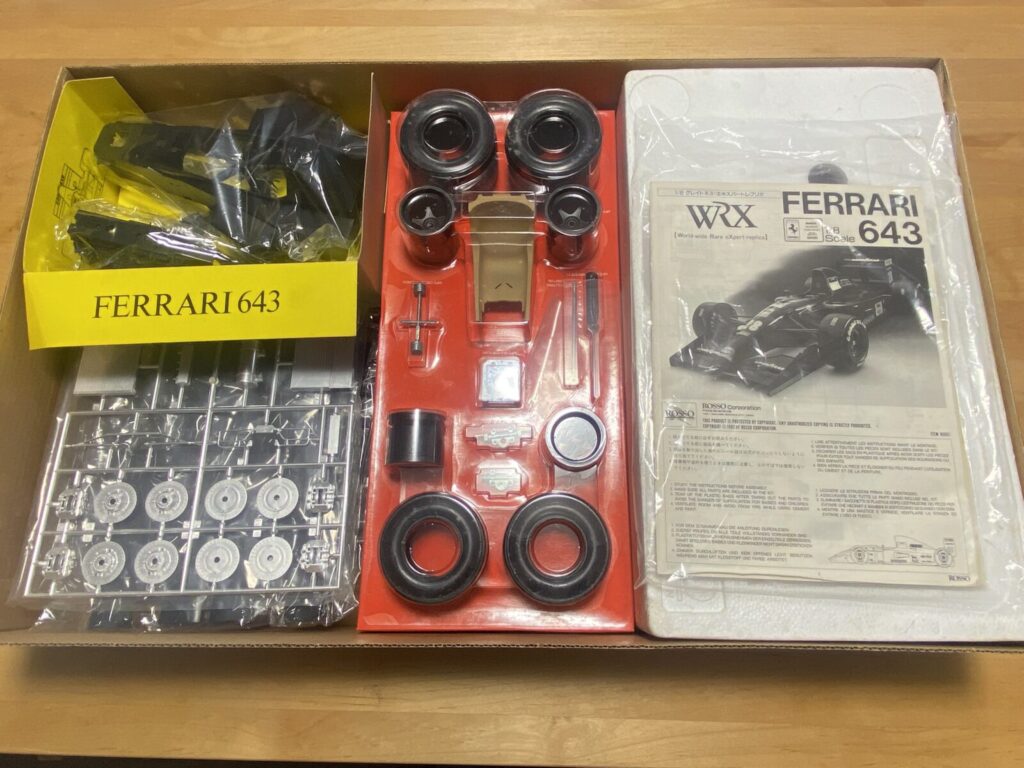
今回はキットの紹介をお送りします。
このキットは1992年にROSSOから発売され、当時大きな話題となりました。従来のスケールモデルではほとんど見られなかった、実車に匹敵する精度を持つアルミダイキャストボディを、業界で初めて採用したキットです。
This time, I will introduce the kit.
This kit was released by ROSSO in 1992, and it became a major topic at the time. It was the first in the scale model industry to feature an aluminum die-cast body with a level of accuracy comparable to the real car—something rarely seen in conventional kits up to that point.
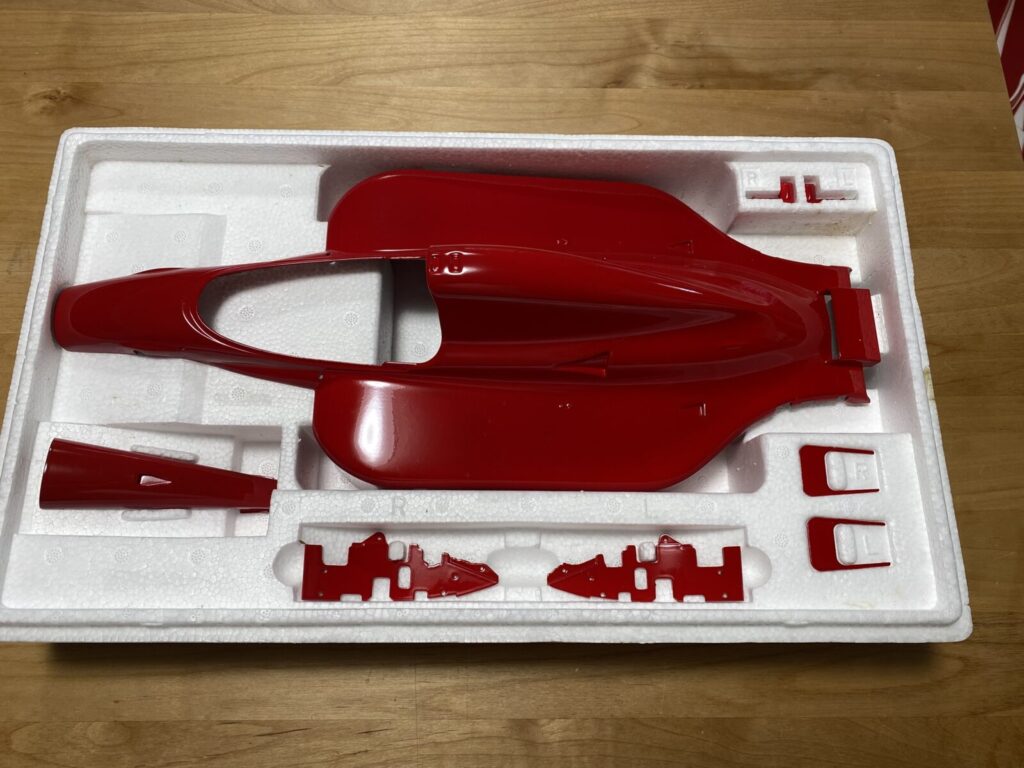
カウルなどのボディパーツは、あらかじめ塗装済みの状態で出荷されています。塗装表現においては、熟練したプロの技術を数値データとして機械に記憶させることで、コンピューター制御によるロボット塗装を実現し、塗りムラのない理想的な色味とツヤを再現しています。これは実車と同様の手法です。
また、塗料についても実車と同じポリウレタン塗料が採用されています。
The cowling and other body parts are supplied pre-painted. For the paint finish, skilled professional techniques were digitized and programmed into machines, allowing computer-controlled robotic painting to reproduce an ideal, even color and gloss without unevenness—just like on the real car. In addition, polyurethane paint, the same type used on the actual vehicle, is also employed.
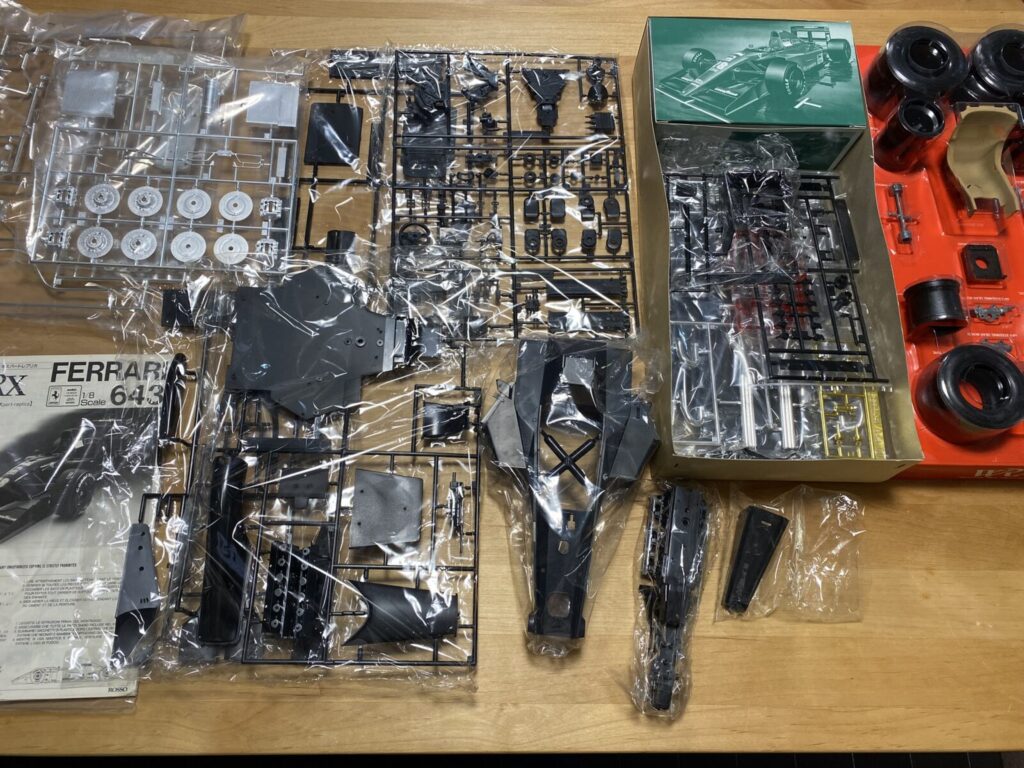
エアインテークなどのパーツにはメッキ加工が施され、エンジンとモノコックの接合部は金属フランジで表現されています。
Details such as the air intake are finished with plated parts, and the connection between the engine and the monocoque is reproduced with metal flanges.
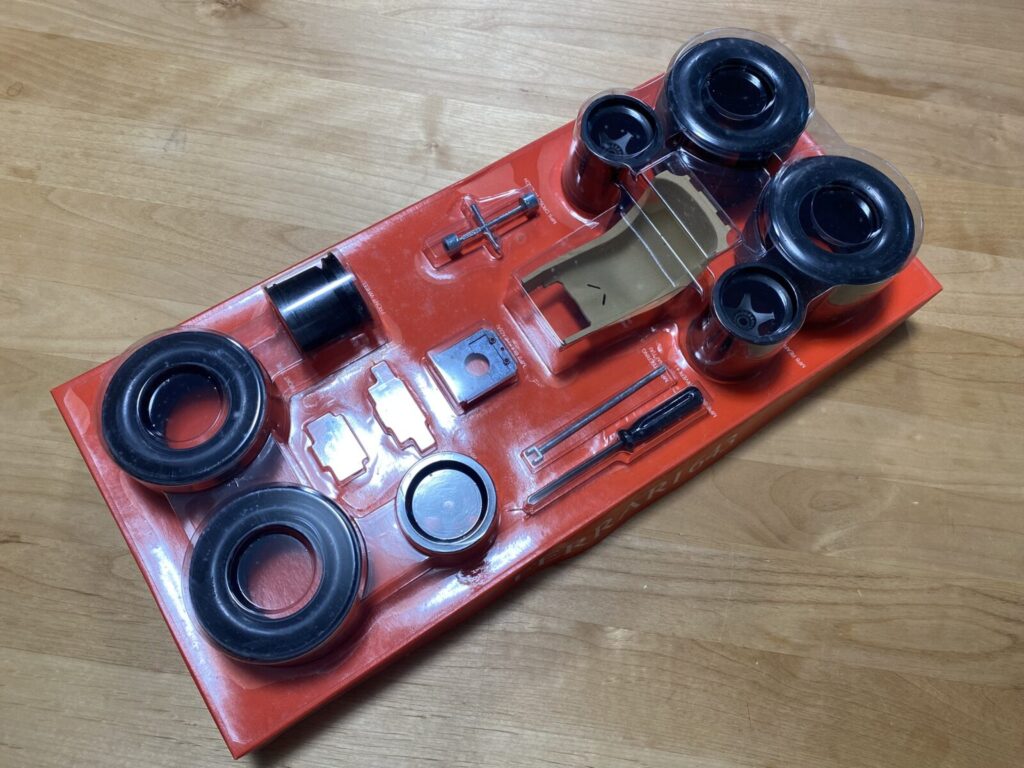
タイヤは中空ラバー製です。
完成時に約3.5kgとなる重量を支えつつ、実車同様の自然な接地感(適度なタイヤのたわみ)を再現するため、タイヤ内部には高密度ウレタンインサートを組み込む設計となっています。
ホイールの装着は、付属の金属製クロスレンチを使用して行います。
The tires are made from hollow rubber.
To support the completed model’s weight of around 3.5 kg and reproduce a realistic stance with slight tire deformation, high-density urethane inserts are designed to be fitted inside the tires.
Wheel installation is also done using the supplied metal cross wrench.
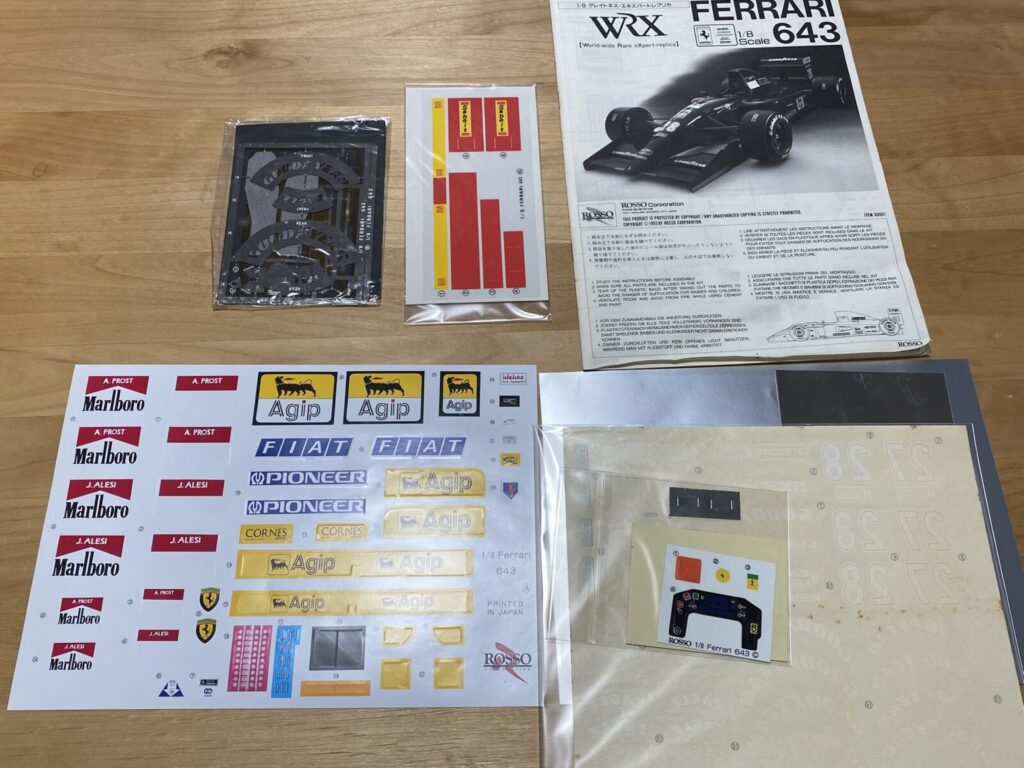
デカール類についてですが、各スポンサーのロゴは水転写式のインスタントレタリングが採用されています。
アジップマークなどのビッグスポンサーのロゴには、ステッカーが使用されています。
以上がキットの大まかな紹介となります。詳細については製作過程で順次紹介していきます。
次回は『製作準備』についてお送りします。
As for the decals, the sponsor logos are provided as water-slide instant lettering.
For major sponsor markings such as the Agip logo, stickers are used.
That concludes a general overview of the kit. More details will be introduced during the build process.
Next time, I will cover the preparation stage.